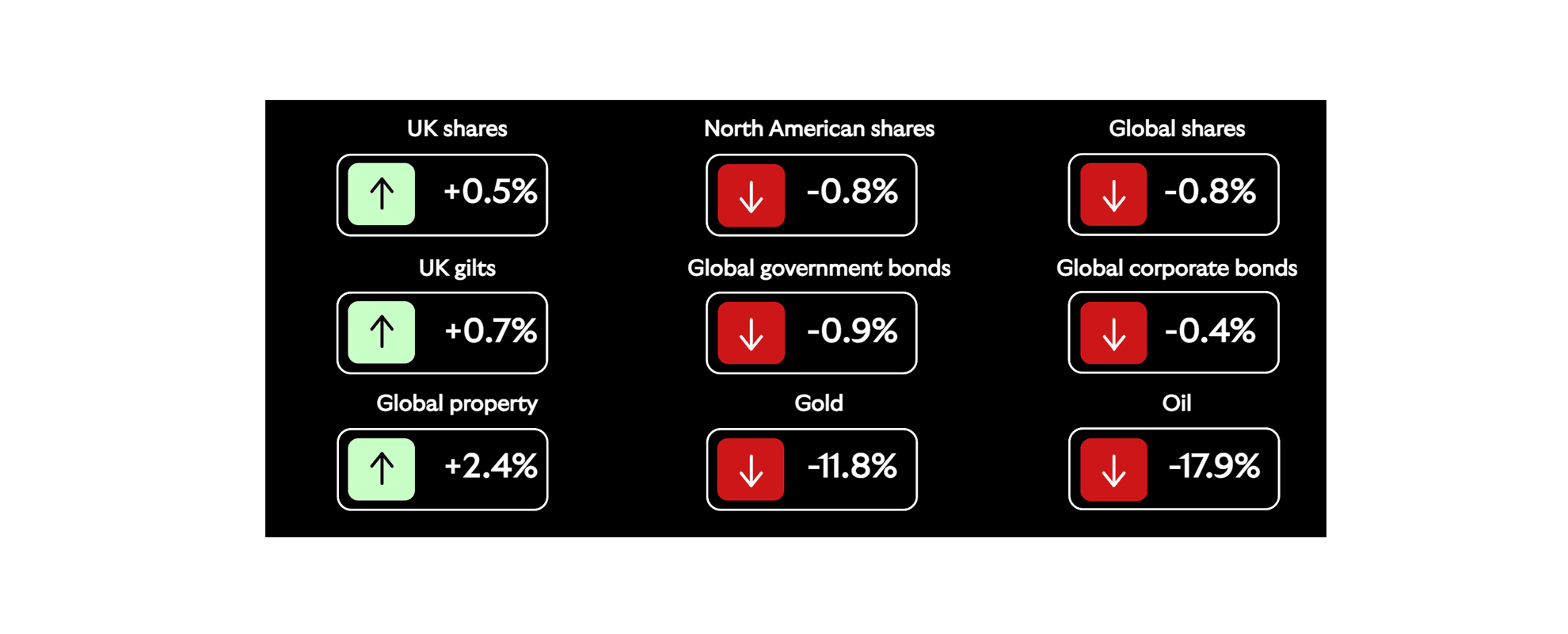
Global bond markets remained sensitive to energy price swings throughout June. An early rise in government bond yields was subsequently reversed, leaving yields broadly lower over the month. In the US, yields at the short-end of the interest rate curve rose while long-end yields fell as strong labour market data raised expectation for future interest rate hikes. The Federal Open Market Committee (FOMC) left the fed funds target rate unchanged at 3.50-3.75%.
Meanwhile, the European Central Bank raised rates by 25 basis points. Given ongoing uncertainty, President Lagarde reiterated that monetary policy is not on a pre-determined path. The Bank of Japan (BoJ) also raised its policy rate by 25 basis points to 1.00%. In the UK, the Bank of England held the base rate at 3.75% in a split vote, with two members voting for a 25 basis point rate hike.
Within investment grade credit markets, total returns were positive in both US dollar and euro denominated markets. However, while euro IG performed in line with government bond markets, a widening of credit spreads in the US resulted in negative excess returns. Primary issuance remains robust reflecting refinancing and AI-related capital expenditure.
It was a similar dynamic across high yield markets, with the euro denominated issuers outperforming the US on both an absolute return and on a spread basis.