MarketWatch for July 2026
July saw global equities post modest gains, although technology stocks lost momentum as investors questioned AI-related spending and valuations. Bond markets weakened as inflation concerns pushed yields higher, while commodities benefited from rising energy prices following renewed conflict in the Middle East. Read on for a closer look at the key market developments shaping investment performance around the world.
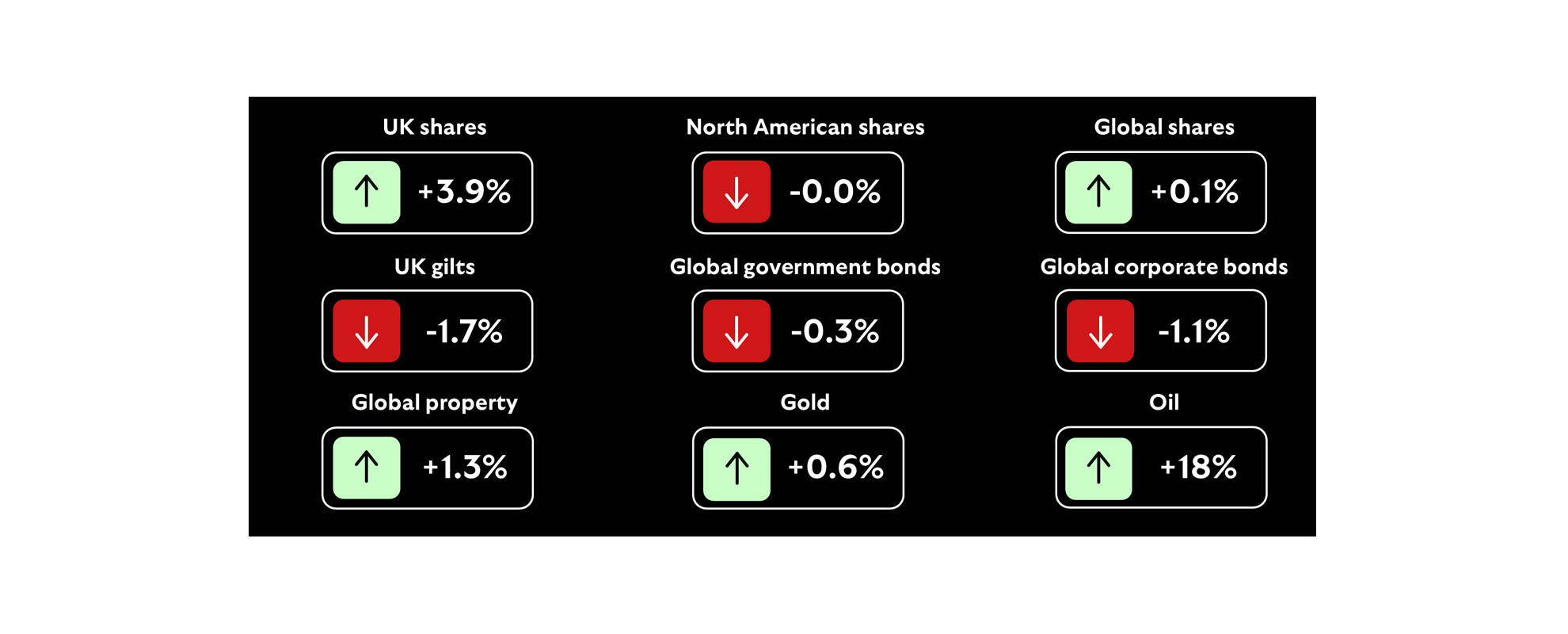
Global equities, as measured by the MSCI World index, gained slightly in July. The month was marked by a move away from AI related stocks. Bonds generally registered negative returns amid inflation worries. Renewed conflict in the Middle East led to higher oil prices.
United States
US equities were marginally weaker overall. The information technology sector fell amid concerns over the scale of AI investments and potential competitive threats. However, this was largely offset by gains seen in other sectors including financials, healthcare and energy.
Europe
Eurozone shares fell slightly (as measured by MSCI EMU). Again, the information technology sector saw a decline. Data showed eurozone GDP rose by 0.4% in Q2 while inflation remained above target in July.
United Kingdom
UK shares rose in July, outperforming other regions. Top gaining sectors included energy while the large financials sector also performed well.
Japan
Within Japanese equities, the TOPIX Total Return index edged higher while the tech-heavy Nikkei 225 fell. Market leadership shifted away from AI- and semiconductor-related stocks toward value and cyclical sectors.
Emerging Markets
Emerging market (EM) equities posted negative returns in July, underperforming the MSCI World Index. The AI-led rally that has driven EM performance throughout much of 2026 showed further signs of slowing down as Korea and Taiwan led EM lower.
Growing concerns over the sustainability of hyperscaler (companies involved in large-scale computing provision) capex spending, rising competition from China and elevated Korean market leverage fuelled heightened volatility in July. This came against the backdrop of a weaker US dollar and firmer commodity prices.
Fixed Income
In fixed income, bond yields rose (moving opposite to prices) as they continued to track energy prices closely. At the same time, investors questioned whether AI-related capital expenditure and valuations had moved too far, creating divergence within credit issuers.
As expected, the US Federal Open Market Committee left interest rates unchanged at 3.50%–3.75%. The yield curve steepened sharply (marking an underperformance of long-end bonds) as the market questioned Chair Warsh’s firmness in responding to above-target inflation.
The European Central Bank kept its deposit rate at 2.25% but did little to push back against market pricing for further rate rises. Sovereign yields climbed to multi-year highs. In the UK, gilts underperformed initially before stabilising following renewed commitments to fiscal discipline by the new government. In Japan, investors focused on the inflation and interest rate implications of a very weak yen.
Commodities
Commodities gained overall in July with energy sharply higher amid a re-escalation of the conflict in the Middle East.
Important information
Fees and charges apply.
The value of investments and the income from them can fall as well as rise and are not guaranteed. Investors may not get back the amount originally invested.
In preparing this article, we have used third party sources we believe to be reliable as at the date of writing, though we cannot guarantee the accuracy or completeness of the information.
Any views expressed are our inhouse views at the time of publication. This content may not be copied, quoted or circulated (in whole or in part) without prior written consent.