Notice of upcoming changes to Lloyds Wealth Portfolio Funds
Lloyds Wealth (ACD) is making some modest changes to the Lloyds Wealth Portfolio Funds (the funds).
The changes will take effect on 1 October 2026 and you do not need to take any action.
Lloyds Wealth Authorised Corporate Director (ACD) is the part of Lloyds Wealth that is formally responsible for running and overseeing the funds. We explain the changes in more detail below. Importantly, the changes are intended to ensure your portfolio continues to meet its long-term investment objectives. The changes do not significantly impact the way the funds are managed or your risk profile.
Your relationship with us will continue as normal and there will be no change to the level of support you
receive. If you hold other Lloyds Wealth financial products, these are not affected.
If you have any questions, please call a member of our support team on 0808 109 2071.
Changes to the benchmarks of the Lloyds Wealth Portfolio Funds
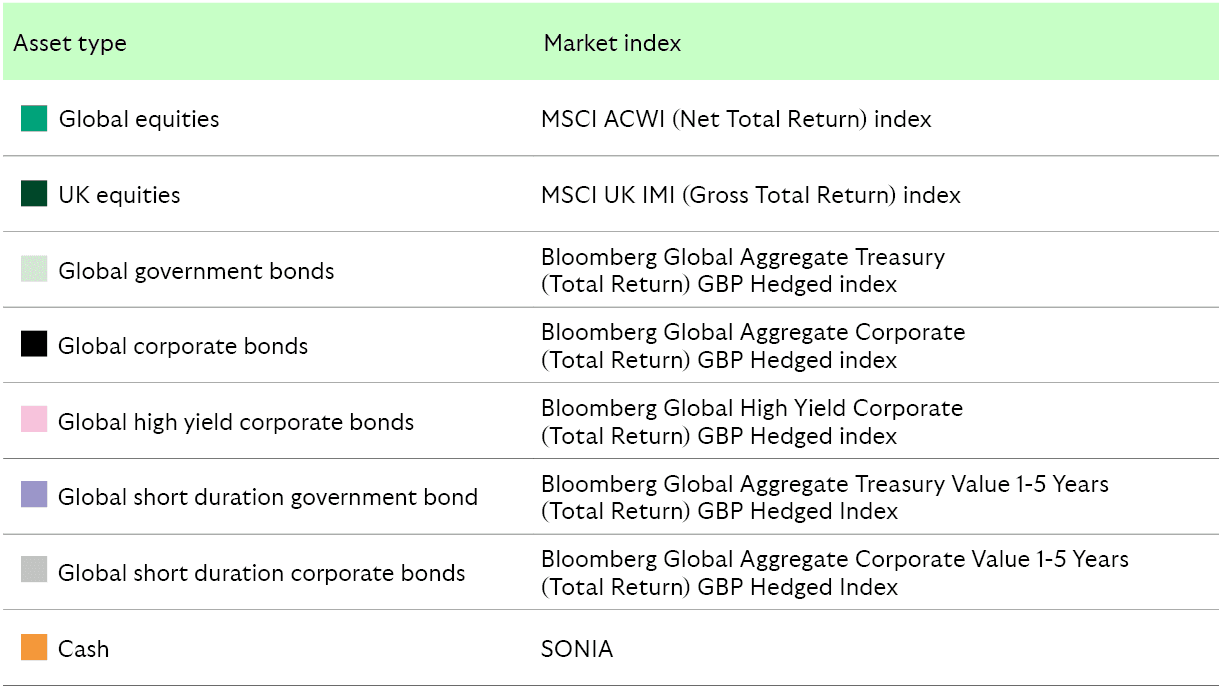
As you may be aware, each of the funds has a benchmark which acts as a guide or reference point, helping you to assess how your investment is performing. Each fund’s benchmark is made up of a mix of different market indices which broadly reflect the types of investments that fund is expected to hold, such as shares and bonds, and the level of risk it is expected to take.
The strategic investment outlook review means the mix of market indices in the funds’ benchmarks
is changing.
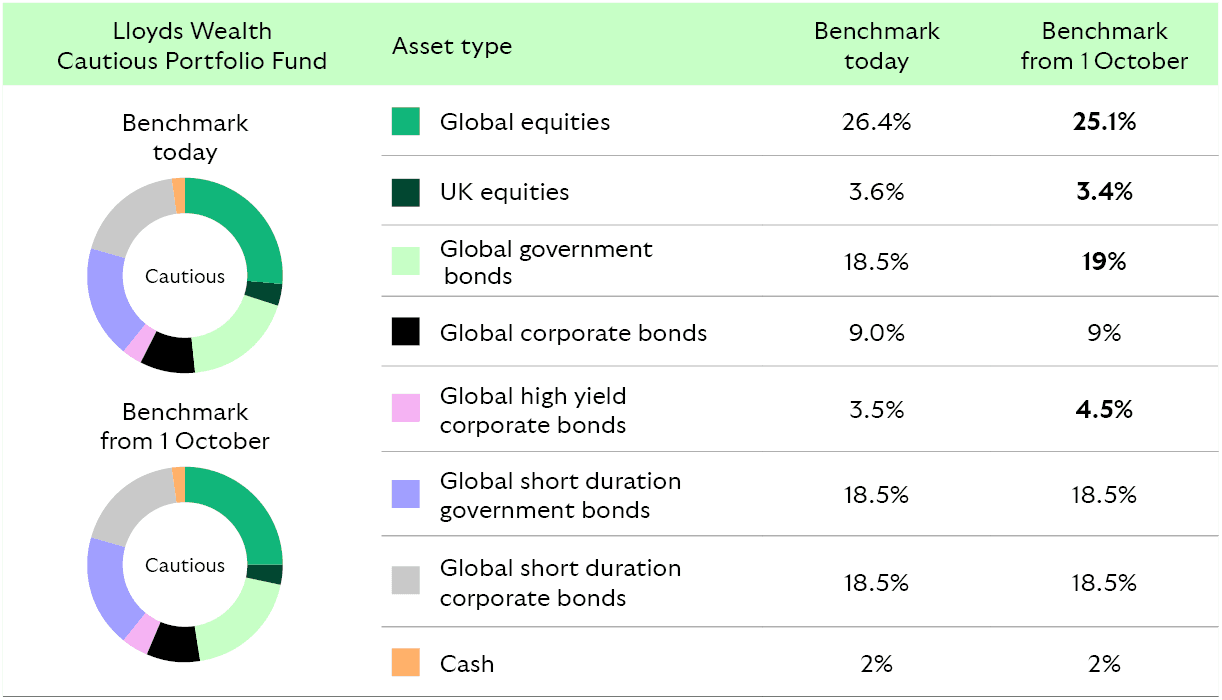
As part of its normal investment process Lloyds Wealth (ACD) regularly reviews its long-term investment strategy for the funds, known as the Strategic Asset Allocation. This is to ensure that the funds’ investments reflect its latest view of the right balance between risk and potential returns for clients. Following its latest review, Lloyds Wealth (ACD) is making some small changes to the mix of market indices used in the funds’ benchmarks to better reflect the funds’ Strategic Asset Allocation.
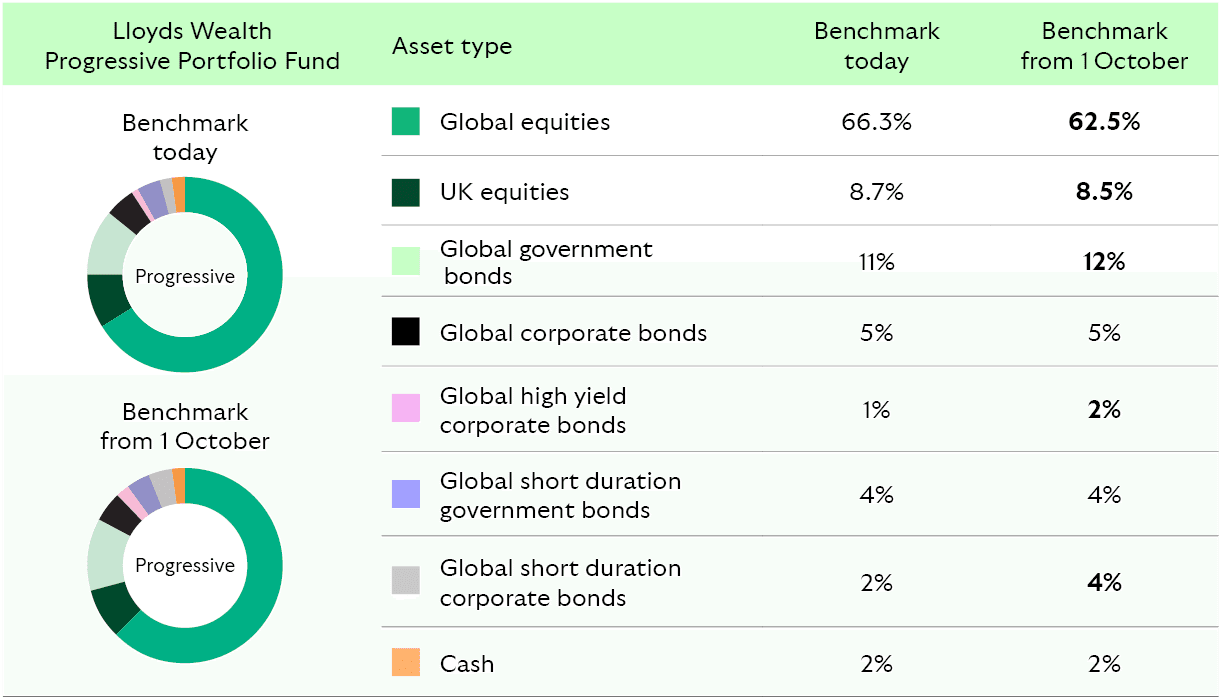
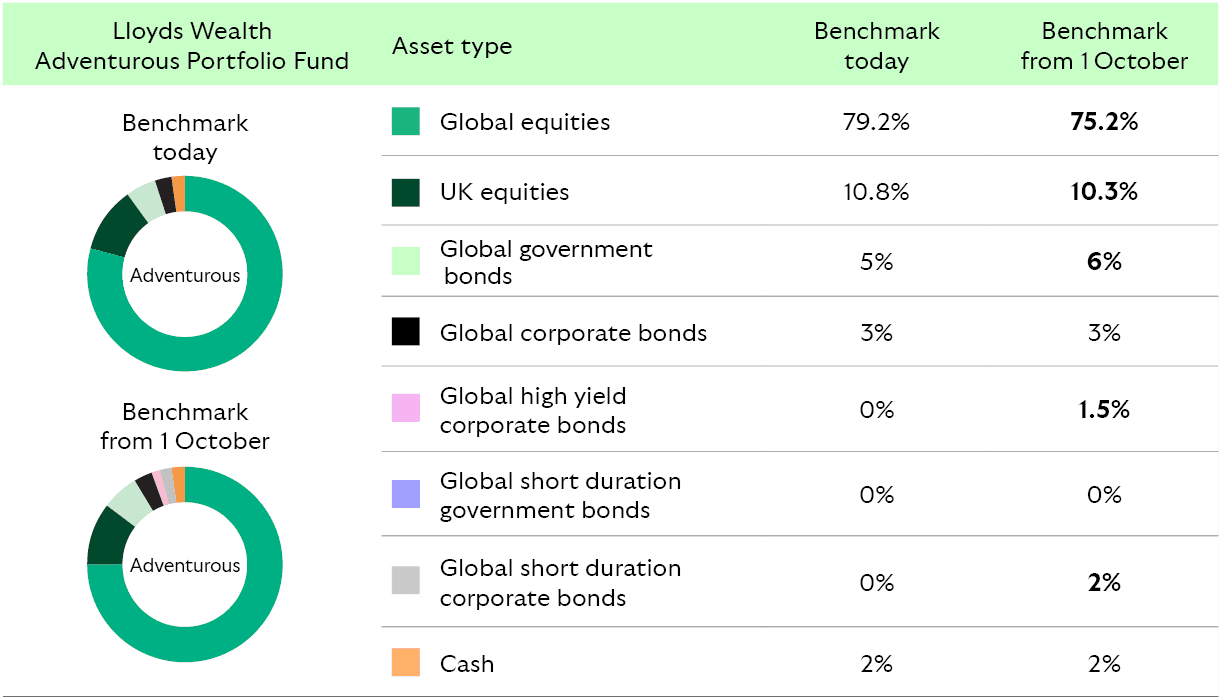
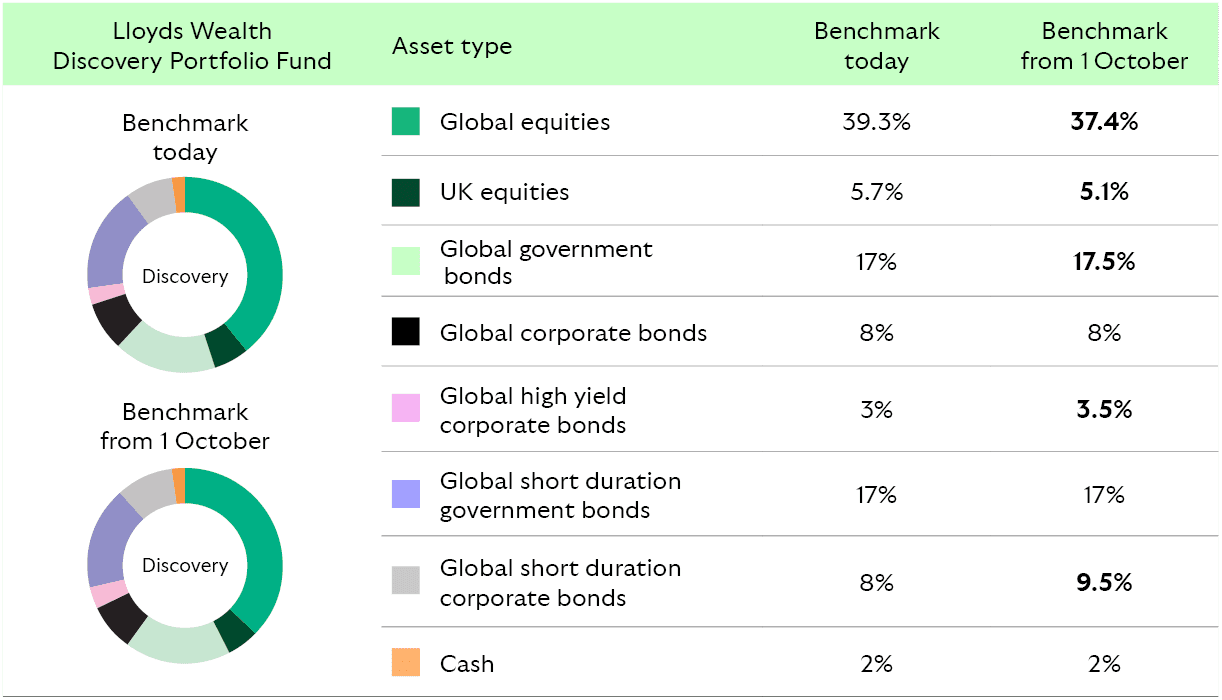
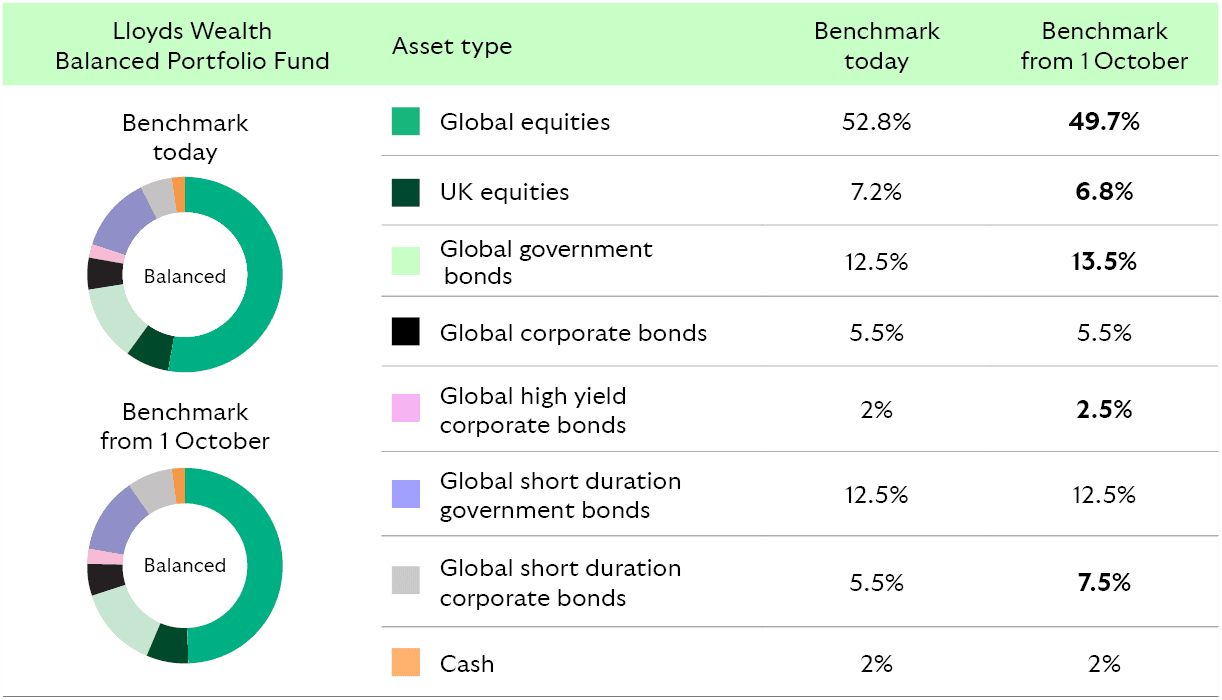
You can see the changes being made to each of the funds’ benchmarks in Appendix 1.
Broadly, the updated benchmarks will include a small reduction in equities (shares) and a small increase in bonds. Equities typically carry a higher level of risk and can experience greater rises and falls in value. Bonds are generally considered lower risk than equities and tend to experience smaller changes in value, although they can still go down as well as up. Lloyds Wealth (ACD) does not expect these updates to significantly change the overall level of risk of the funds.
How the funds’ benchmarks are described is changing
Lloyds Wealth (ACD) is removing references to the benchmark from the Investment Objective of each
fund but retaining them in the description of how the funds are managed in the funds’ prospectus (the main legal document explaining the funds’ characteristics). Lloyds Wealth (ACD) is also changing the way the benchmarks are described, from ‘target’ benchmarks to ‘comparator’ benchmarks. A comparator benchmark is used as a reference point to help you compare and understand the performance of the funds over time, rather than as a target that the funds are aiming to outperform.
We will continue to show you how your investment(s) are performing against the relevant benchmark in your regular reporting.
The benchmarks are a guide and do not restrict what the funds can invest in. While the benchmarks
broadly reflect Lloyds Wealth (ACD)’s long-term views of the types of investments each fund may hold, Lloyds Wealth (ACD) selects the investments held in the funds based on its view of markets at the time. This means a fund’s investments may not exactly match its benchmark.
What this means for costs
The updated benchmarks may mean there is some trading — the buying and selling of investments — within the funds, to align them with Lloyds Wealth (ACD)’s latest long-term investment views. These costs are paid by the funds and reflected in their performance, rather than being charged separately to you. Because Lloyds Wealth does not expect significant trading to be needed as a result of these changes, trading costs are not expected to have a material impact on the funds’ performance.
Appendix 1